VOLUME 29
NARA
Todai-ji Great Buddha, Nara Park Deer & Kasuga Taisha Lanterns
Horyu-ji's Kondo pillars are the oldest wooden building columns in the world, cut and raised in the seventh century and still bearing the roof above them. They stand a short walk from a pagoda of the same age, behind a low white wall in the village of Ikaruga. Nara was Japan's first permanent capital, and what was built then is largely still here. Todai-ji's Daibutsuden, even in its reduced eighteenth-century form, remains among the largest wooden structures ever raised, sheltering a bronze Buddha whose open palm is the size of a man. North of it, the lanterns of Kasuga Taisha line cedar paths walked by sika deer who outnumber the priests. South across the Yamato plain lie the burial mounds and stone monuments of Asuka, where the country was governed before there was a Kyoto to govern it from. Two-thirds of the prefecture is mountain, dense with Yoshino cedar, pilgrim routes of the Omine range, sake villages, kuzu mills, and the gorges around Tenkawa and Totsukawa. Few outsiders go. Fifty pages here: a stone lantern wrapped in moss, a kakinoha-zushi parcel, the vermilion of a twin pagoda, the white robes of a yamabushi on a cedar pass. The oldest country in Japan, still standing.
“Lantern light and cedar shadow, drawn slowly.”
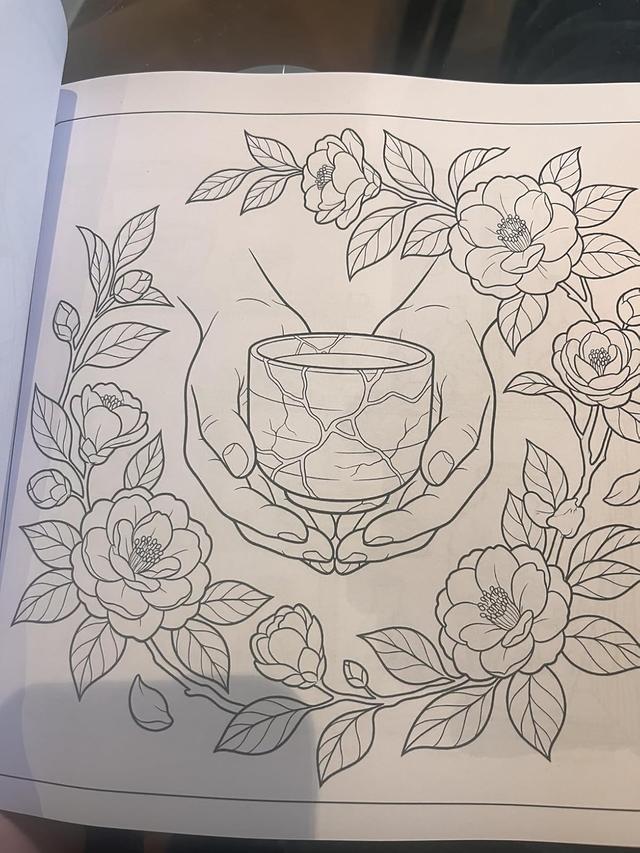
- 40 original Nara Prefecture illustrations
- Single-sided pages to prevent bleed-through
- 8.5 x 8.5 inch square format
- A mix of detailed and breathable compositions
- Brief editorial introduction to Nara
- Anyone with an interest in Japan, its temples, and its deer-park heritage
- Adults who use coloring for relaxation and quiet focus
- A considered gift for friends and family with a love of Japan
The Nara coloring book is Volume 29 of Sora Mikami's Prefectures of Japan series, a 47-volume collection that explores Japan one prefecture at a time. It gathers 40 original black-line illustrations of Nara. It draws on Todai-ji Great Buddha, Nara Park Deer, and Kasuga Taisha Lanterns, alongside the everyday scenes Nara considers its own.
You will find Todai-ji Great Buddha, Nara Park Deer, and Kasuga Taisha Lanterns, together with the landmarks, food, and quiet corners that give Nara its character. The compositions move between detailed, intricate pages and calmer, more breathable ones, so there is something for every mood.
Yes. The book mixes detailed illustrations with more open, breathable designs, so beginners and experienced colorists alike can settle in. The large 8.5 x 8.5 inch square pages give you plenty of room to work, and every page is printed single-sided.
Colored pencils, markers, and gel pens all work beautifully. Because every illustration is printed single-sided on white paper, you can use heavier media without bleed-through onto another design. Slip a sheet of card behind the page if you want to be sure.
It is Volume 29 of a planned 47, one book for every Japanese prefecture. The volumes can be coloured in any order, and together they sketch the whole country one place at a time. Nara sits in the Kansai region of Japan.